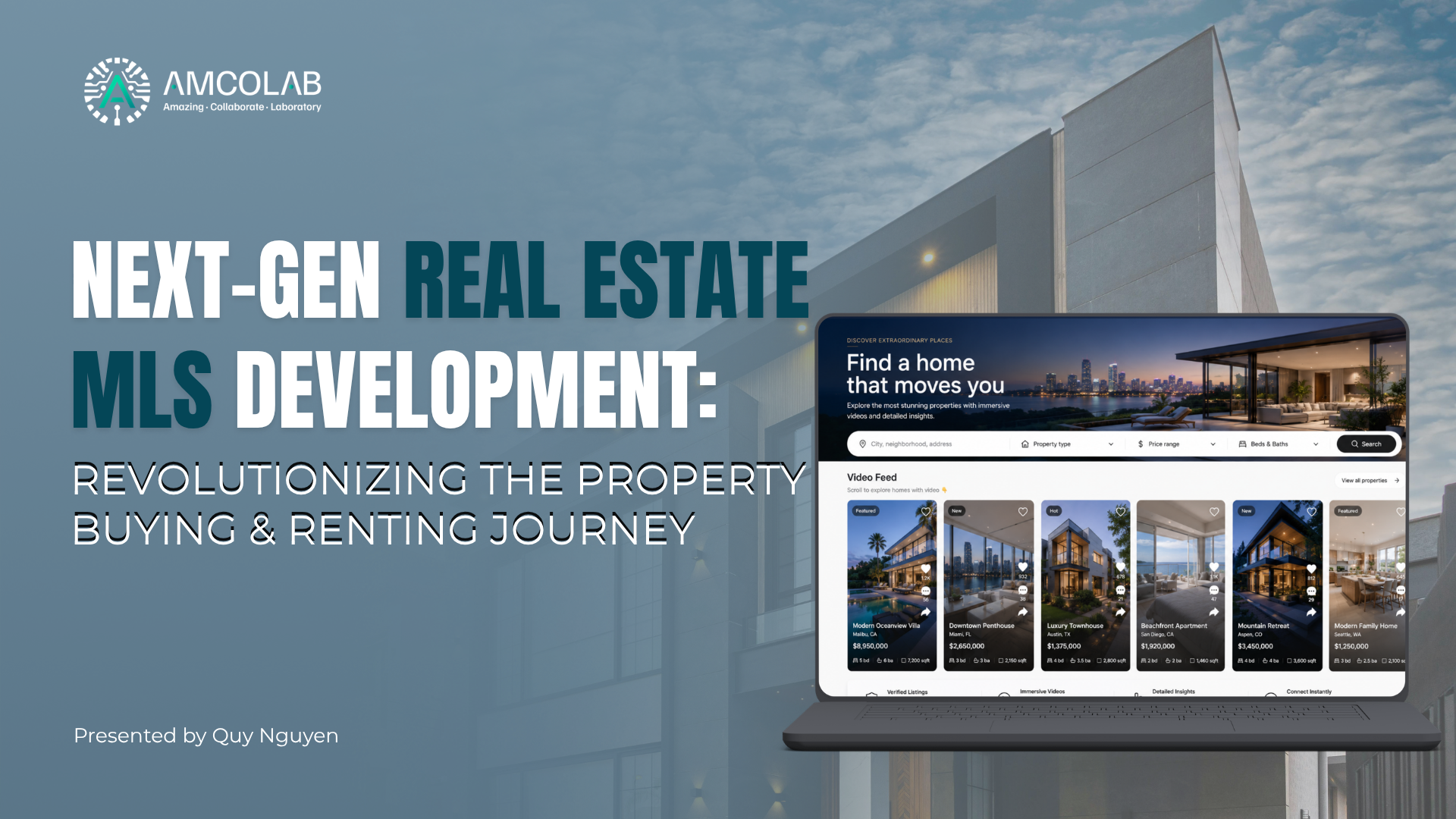
NEXT-GEN REAL ESTATE MLS DEVELOPMENT: REVOLUTIONIZING THE PROPERTY BUYING & RENTING JOURNEY
Discover how next-generation MLS development is transforming the real estate industry with interactive maps, immersive 3D property tours, mobile-first experiences, automated transaction workflows, secure digital payments, and scalable cloud architecture. Learn how a custom MLS platform helps agencies, brokerages, and PropTech companies improve customer experiences.
The global real estate market is moving at an unprecedented pace, yet many property platforms remain anchored to outdated technology. We are all familiar with the industry's traditional pain points: cluttered interfaces, stale or duplicate listings, fragmented communication, and mountains of manual paperwork. These bottlenecks do not just frustrate buyers and renters; they actively drain productivity from real estate agencies and stall revenue growth.
Today’s consumers have been conditioned by the instant gratification of e-commerce and ride-sharing apps. They expect the same speed, transparency, and ease of use when making one of the most significant financial decisions of their lives.
For real estate enterprises, brokerages, and PropTech innovators, building or upgrading to a next-generation Multiple Listing Service (MLS) platform is no longer just about maintaining a static database of homes. It is a strategic business pivot toward creating an end-to-end Transaction Experience Platform.
By focusing on intuitive user experience (UX), deep digital automation, and cost-effective development, businesses can eliminate friction, slash operational overhead, and close deals significantly faster. Here is a comprehensive look at how modern MLS software development is reshaping the property ecosystem.
1. Transforming Property Discovery: Seamless, Immersive, and Mobile-First
The property journey always begins with discovery. However, traditional platforms often overwhelm users with rigid text filters and uninspiring photo galleries. Next-gen MLS software completely reimagines this initial phase, turning property hunting into an engaging, visual, and highly personalized experience.
Advanced Interactive Map Layers
Modern buyers do not simply purchase a structure; they invest in a community and a lifestyle. Next-gen MLS platforms treat location data as a dynamic asset. By integrating advanced Map APIs (such as custom Google Maps or Mapbox architectures), developers can layer critical real-world data directly onto the property search grid.
Lifestyle & Utility Mapping
Users can toggle interactive overlays to instantly view local school ratings, hospital zones, public transit access, daily traffic congestion patterns, and even neighborhood safety statistics.
Zoning & Future Development
For investors, integrating municipal data layers allows them to see future urban planning, public infrastructure projects, or zoning changes directly on the map, helping them make data-backed decisions in seconds.
Frictionless Virtual Tours and 3D Architecture
Static 2D images often fail to convey the true flow, lighting, and layout of a property, leading to mismatched expectations and wasted physical viewings. Integrating high-performance 3D rendering engines and immersive Virtual Reality (VR) environments directly into the MLS platform solves this problem.
Web-Native 3D Walkthroughs
By utilizing lightweight WebGL frameworks, users can take interactive, 360-degree virtual tours of a home directly within their web browser or mobile app without downloading external plugins.
Efficient Funnel Filtering
This immersive preview acts as an excellent qualifying tool. Statistics show that platforms with integrated 3D tours can filter out up to 80% of unsuitable properties before a single agent or buyer spends time, effort, or fuel on a physical visit. When a client finally schedules an in-person viewing, they are already highly qualified and deeply interested.
The Omnichannel, Mobile-First Reality
Property hunting is an on-the-go activity. Consumers browse listings during their morning commute, over lunch, or while driving through target neighborhoods on weekends. A next-gen MLS must deliver a flawless, unified experience across every device.
Cross-Device Synchronization
A user should be able to save a highly specific search filter on their office desktop and have that exact preference instantly sync with their mobile app.
Geo-Fenced Push Notifications
By leveraging native mobile GPS capabilities, the platform can send a real-time notification to a user's phone if a property matching their criteria hits the market while they are physically driving through that specific neighborhood.
2. Digitizing the Transaction Pipeline: Fast, Transparent, and Frictionless
Finding the right property is only half the battle. The most significant friction in real estate usually occurs after the buyer says "I want this one." The traditional transaction phase is notoriously slowed down by bureaucratic hurdles, back-and-forth emails, and security anxieties. Next-gen MLS software removes these roadblocks by digitizing and automating the entire transaction pipeline.
Smart scheduling → Secure digital deposit → Automated verification → Legally binding & Instant booking
The Visualized, Step-by-Step Transaction Pipeline
Uncertainty breeds anxiety for buyers and sellers alike. Modern MLS software eliminates the black box of property deals by presenting an automated, visible pipeline—much like tracking an e-commerce order.
Shared Dashboards
Buyers, sellers, and their respective agents share a centralized dashboard where every step of the closing process is clearly mapped out.
Milestone Tracking
From the moment an offer is made, everyone can track milestones in real time: scheduling the physical inspection, verifying property titles, locking in the deposit, and preparing final closing documents.
Automated SMS and email alerts keep all parties moving forward, reducing delays caused by communication gaps.
Smart Document Automation & E-Signing Integration
Printing, scanning, physical signing, and overnight courier services are costly, slow, and prone to administrative errors. A modern MLS acts as a secure digital vault and a document generator.
Automated Contract Generation
Standardized lease agreements, purchase offers, and disclosure forms can be automatically generated by pulling data directly from the property listing and user profiles, minimizing human typos.
Seamless E-Signatures
By deeply embedding legally compliant electronic signature APIs (such as DocuSign or Adobe Sign), contracts can be reviewed, signed, and countersigned on any device within minutes. This completely removes the geographical barriers of real estate, allowing an investor on the other side of the country to secure a property instantly.
Integrated Secure Payments & Trusted Escrow
Large financial transactions require robust security frameworks to prevent fraud and build trust. Next-gen MLS software integrates directly with verified payment gateways and digital escrow systems.
Safe Earnest Money Deposits
Buyers can securely transfer earnest money or reservation fees directly through the platform via bank transfers or credit cards.
Escrow Protection
Funds are held securely in a digital escrow account and are only released to the seller or landlord once specific, pre-programmed contractual conditions are verified by the system. This transparent mechanism protects the buyer's capital and guarantees the seller's intent.
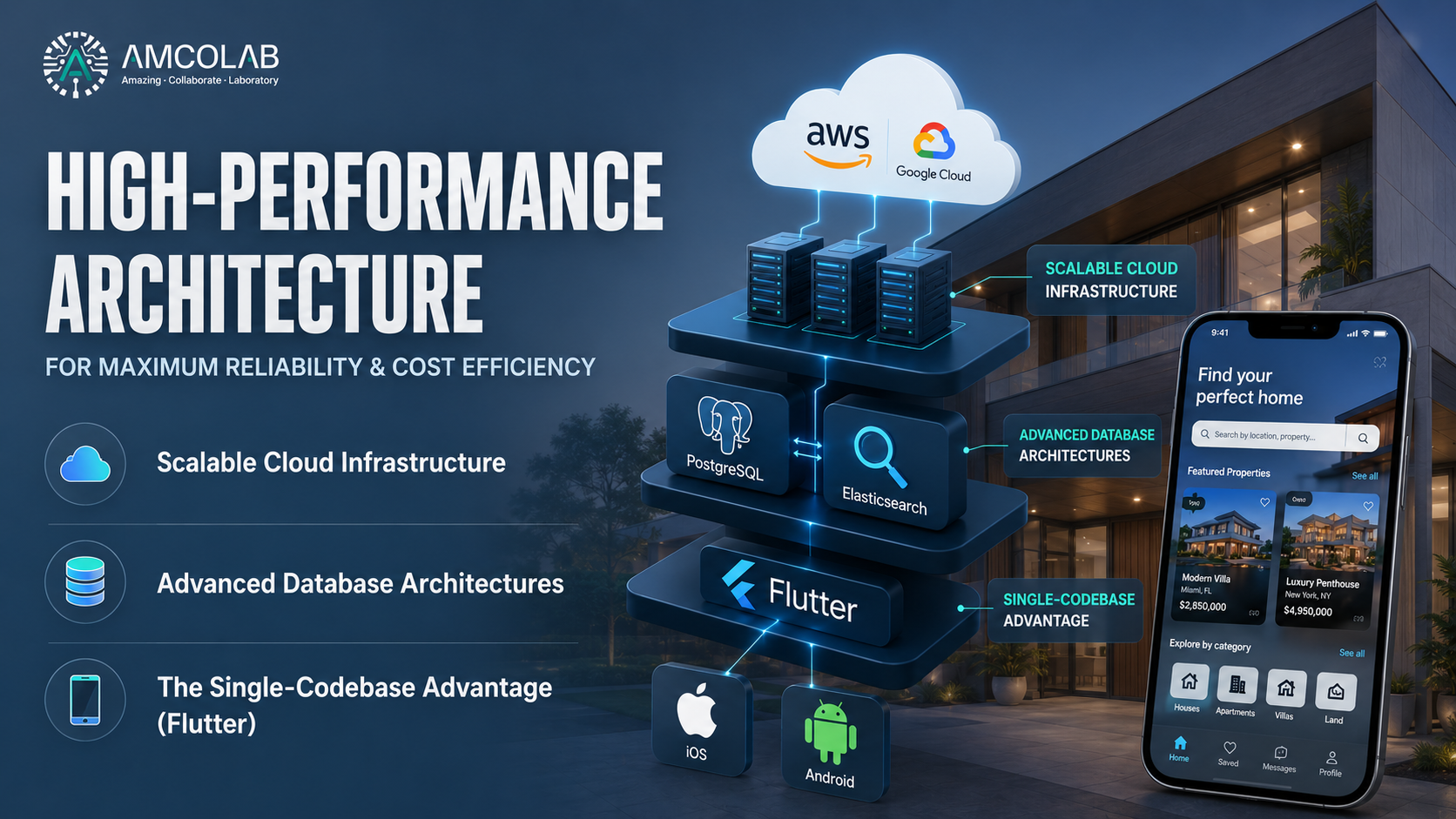
3. High-Performance Architecture for Maximum Reliability and Cost Efficiency
Building an enterprise-grade platform capable of handling thousands of high-resolution images, heavy 3D files, dynamic maps, and secure transaction data requires a brilliant technical approach. Crucially, choosing the right modern tech stack allows businesses to build a premium system without overstretching their development budgets.
Scalable Cloud Infrastructure
Utilizing robust cloud services like AWS or Google Cloud Platform ensures the system remains lightning-fast, even during peak market hours when tens of thousands of users are querying database records simultaneously.
Advanced Database Architectures
Pairing a robust relational database (like PostgreSQL) with a specialized search engine (like Elasticsearch) ensures that complex property filtration - such as searching by price range, square footage, amenities, and location boundaries all at once—returns results in milliseconds.
The Single-Codebase Advantage (Flutter)
Historically, launching a premium real estate app required hiring two separate engineering teams to write one app for iOS and another for Android. Modern development has evolved past this.
By utilizing Flutter, a premier cross-platform framework, your development team can build a single, high-performance codebase that deploys beautifully to both iOS and Android. This smart choice reduces mobile development costs by up to 40% and slashes your time-to-market in half, allowing you to launch a smooth, native-feeling mobile experience rapidly.
4. The Business Value: Understanding the Return on Investment (ROI)
For real estate brands, developers, and traditional agencies, upgrading to a next-generation custom MLS platform is a major business catalyst that yields tangible, long-term financial rewards.
Strategic Metric | Impact of Next-Gen MLS Platforms | Business Result |
User Retention Rates | Immersive 3D tours, clean UX, and rapid map loading keep users engaged on your site longer. | Higher Lead Generation: Casual visitors turn into high-intent inbound leads. |
Sales Cycle Duration | Automated milestone tracking, digital workflows, and integrated e-signing remove paperwork delays. | Faster Revenue: Shorter closing windows accelerate company cash flow. |
Agent Productivity | Software automatically handles repetitive admin tasks, scheduling, and document drafting. | Lower Overhead Costs: Agents spend 100% of their time closing deals rather than managing paperwork. |
Conclusion: Convenience is the Ultimate Competitive Advantage
In the modern real estate landscape, the platforms that win are not necessarily those with the most listings, but those that provide the most seamless, transparent, and time-saving experience.
By investing in a mobile-first philosophy, interactive visual discovery tools, automated digital workflows, and cost-efficient development frameworks like Flutter, your custom MLS software can set an entirely new benchmark for the real estate industry. Digitizing the property journey is no longer a luxury for tomorrow- it is the definitive blueprint for business growth today.
Frequently Asked Questions (FAQ)
How long does it typically take to develop a custom next-gen MLS platform?
The timeline depends heavily on the complexity of your requirements. For a Minimum Viable Product (MVP) focusing on advanced visual search, dynamic mapping, and basic listing management, development usually takes 3 to 4 months. For a full-scale enterprise platform with automated transaction pipelines, digital escrow integration, and custom 3D walkthrough support, the timeline can range from 6 to 9 months. Using cross-platform frameworks like Flutter can significantly shorten these timelines for the mobile app portion.
Is it better to buy a ready-made SaaS real estate software or build a custom MLS platform?
Ready-made SaaS solutions are great for small, local agencies looking for a quick setup with low upfront costs. However, for growing enterprises and PropTech startups, a custom MLS platform is the superior choice. Custom development gives you 100% ownership of your Big Data, allows you to design unique transaction workflows, eliminates recurring per-user licensing fees, and gives you the freedom to scale or integrate any third-party tool as your business evolves.
How do next-gen MLS platforms handle data accuracy and prevent fake listings?
Data integrity is maintained through automated validation workflows. When a broker or seller uploads a listing, the system runs automatic cross-checks against official land registries or municipal databases via Web APIs to verify property ownership and history. Additionally, the backend architecture can implement strict deduplication algorithms to ensure that the same property listed by multiple agents is merged into a single, clean master file, keeping the user experience clear and trustworthy.
Can a next-gen MLS platform handle international real estate transactions?
Yes, absolutely. Because the transaction pipeline is entirely digitized, a modern MLS can be engineered to support multi-currency payment gateways, automatic tax calculators for different regions, and multi-language interfaces. Combined with secure digital escrow services and legally binding e-signatures (compliant with international standards like eIDAS or ESIGN Act), an investor in New York can safely buy or lease a commercial property in Tokyo or Ho Chi Minh City without leaving their office.
How expensive is it to maintain the infrastructure for heavy 3D tours and dynamic maps?
Thanks to modern cloud architecture, maintenance costs are highly scalable and manageable. By utilizing Serverless Architecture and Cloud Content Delivery Networks (CDNs) like AWS CloudFront, your system only pays for the actual computing power and bandwidth used. Heavy 3D files and high-resolution maps are cached efficiently closer to the user's location, which drastically lowers cloud hosting bills while keeping the platform lightning-fast.